


How Often Should You Test, Replace, and Maintain Carbon Monoxide Detectors??
6th January 2026 – Carbon monoxide (CO) is a colourless, odourless gas that can build up quickly and become life-threatening before anyone realises there is a problem. Because CO cannot be detected by human senses, carbon monoxide detectors are one of the most important safety devices in any home. However, simply installing them is not enough… they must be correctly positioned, regularly tested, and replaced on schedule to provide real protection.
Rob Aiers, Renowned CO Expert & Founder of CarbonMonoxideKills.com “After more than 20 years working with carbon monoxide poisoning incidents, I regularly see cases where functioning detectors could have prevented serious injury or death. In many U.S. claims, the absence or failure of CO alarms becomes a critical factor. Proper installation and maintenance protect lives and can also be vital evidence when investigating liability.”
How Many CO Detectors Should You Have and Where Should They Be Installed?
In a typical U.S. home, experts recommend:
- At least one carbon monoxide detector on every level of the home
- One outside sleeping areas, such as in hallways near bedrooms
- Additional detectors near fuel-burning appliances, such as furnaces or water heaters (but not directly above them)
Detectors should generally be installed:
- On the wall or ceiling, according to manufacturer instructions
- At least 10–20 feet from fuel-burning appliances
- Away from bathrooms, kitchens, or areas with high humidity
Carbon monoxide detectors are inexpensive. In the U.S., most reliable models cost between $20 and $40 per unit, making it affordable to install multiple alarms throughout a property. To put it into context, over the life of each unit, that equates to less than $0.10 per week! Considering the risk, installing more detectors rather than fewer is always safer.
Use CO Detectors in Other Environments Too
Carbon monoxide exposure doesn’t only happen in permanent homes. Detectors should also be used in:
- Vacation cabins and rental properties, especially those with fireplaces, gas heaters, or generators
- RVs, camper vans, and travel trailers, where propane appliances and generators are common
- Boats and houseboats, where engine exhaust and generators can cause dangerous CO build-up
In these environments:
- Install detectors near sleeping areas and inside enclosed cabins
- Use marine- or RV-rated CO detectors where appropriate
- Never rely on open windows or ventilation alone — CO can accumulate unpredictably
Test CO Alarms Every Month
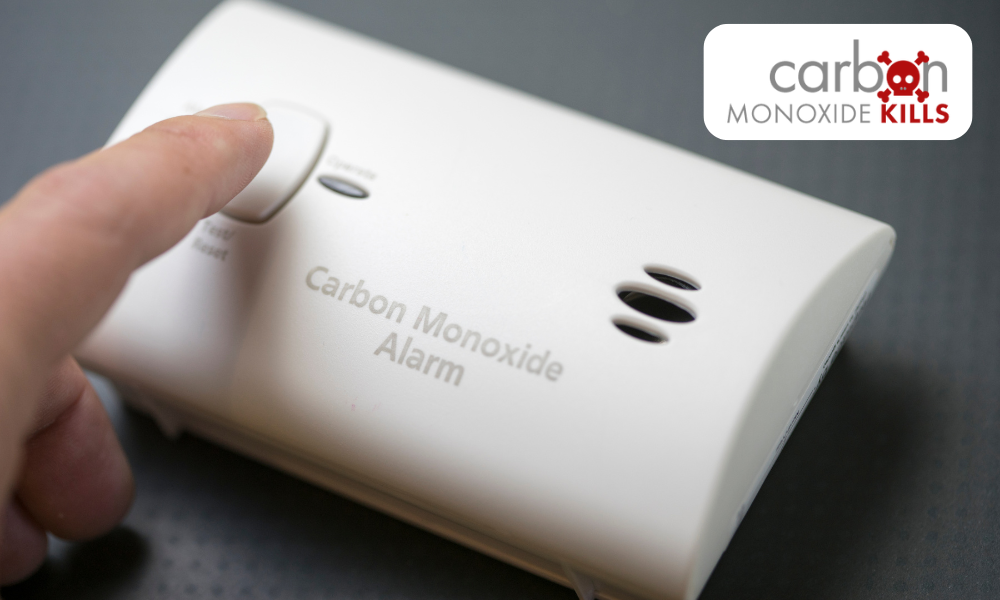
Press the test button on each detector once a month to ensure the alarm and internal circuitry are working. A weak or absent sound means the unit should be replaced immediately.
Replace Batteries Every 6–12 Months
For battery-powered units, replace batteries every six months or whenever the alarm chirps. Sealed 10-year battery units require no battery changes but must be replaced entirely at the end of their lifespan.
Replace CO Detectors Every 5–7 Years
The sensors inside CO detectors degrade over time. Most manufacturers recommend replacing units every 5–7 years, even if they appear to function normally.
When in Doubt, Replace It
Carbon monoxide detectors are a low-cost safety device with a high impact. If a detector is damaged, behaving unpredictably, or past its service life, replacing it promptly could save lives.
Carbon Monoxide is a colorless, odorless toxic gas. In the United States alone, the CDC states that every year carbon monoxide poisoning not linked to fires leads to over 50,000 Americans going to the emergency room, with around 15,000 being hospitalized and as many as 500 deaths.
Generators, car engines, air conditioning systems, boilers, ovens and other equipment where combustion takes place can cause carbon monoxide exposure when used incorrectly and/or in the wrong environment, or if it is not properly maintained.
Please see our simple safety advice on how to protect yourself and your loved ones from the very real dangers of carbon monoxide.
Or, click here and complete our short contact form if you or someone you know has suffered carbon monoxide poisoning and need advice on whether you may have grounds to claim compensation from those responsible.


Leave a Reply